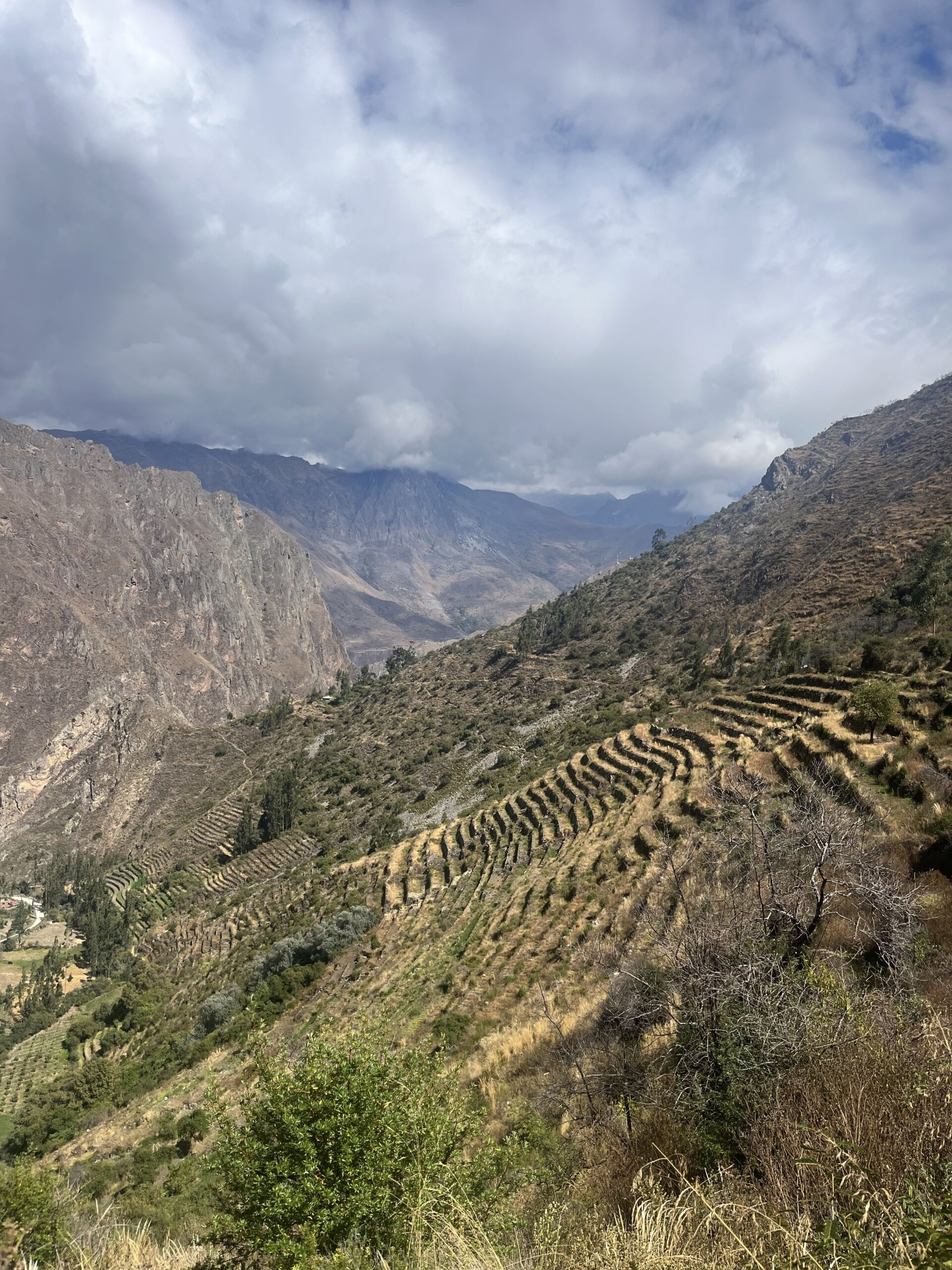
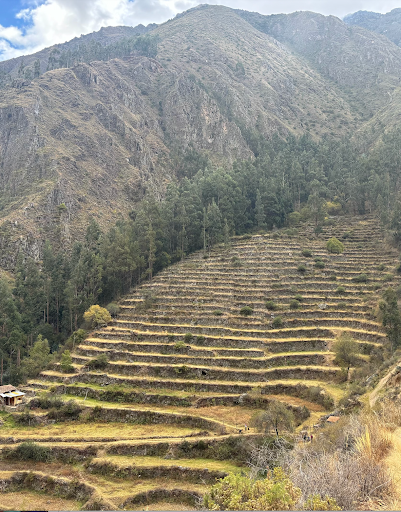
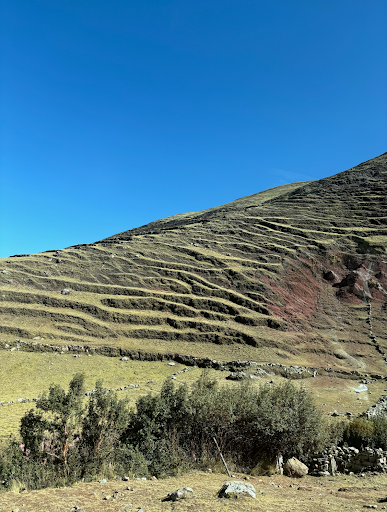
High in Peru’s Andes Mountains, thousands of stone terraces climb steep hillsides like a staircase leading into the clouds. From a distance, they are inseparable from the mountains themselves. However, these stone steps are the product of centuries of human ingenuity and environmental knowledge. These terraces are not only remnants of the past, but they are models of how human design can work with, rather than against, the environment.
These terraces are a farming system developed by the Wari civilization, and later advanced by the Incas. At the height of the Incan civilization in the 1400s, terraces covered much of the empire and fed its population. The Andes are steep and rugged, making farming in the mountains very difficult. There are many challenges with soil erosion, water runoff, and temperature variation, but the Incas learned how to work with the mountains’ natural shapes rather than forcing the land to conform to human needs. The solution they developed was terraces fed by cisterns and irrigation canals that snaked around and down the mountains. The stair-step platforms maximize agricultural space and regulate water. Built from carefully arranged layers of stone, gravel, and fertile soil, the terraces prevented erosion, managed water, and transformed steep mountainsides into productive farmland. What emerged was not just a farming method, but an entire ecological system shaped through long-term observation of land and climate.
Additionally, each level was used to cultivate different crops. Lower, warmer terraces were used to grow staples such as maize and beans, while cooler and higher terraces were reserved for crops including potatoes and quinoa. Furthermore, these terraces were connected to expansive aqueducts that carried the runoff and rainwater. These constructions reflected environmental knowledge accumulated through generations of observation of weather, soil, and water.
When Spanish Conquistadors arrived, many were forced to abandon their traditional farming methods to grow cash crops that were sent back to Europe. This left many of the farming terraces in disrepair. However, there has been a resurgence in techniques similar to Incan terrace farming due to its benefits in the current environment.
As modern agriculture faces soil degradation and climate instability, these systems have a renewed relevance today. These terraces preserve water, protecting against droughts; prevent soil erosion; and protect the crops from unexpected frosts or heat waves. Farmers are now realizing how valuable the knowledge of their ancestors is as they turn to terrace farming as a solution in today’s dynamic world. A sustainable solution does not need to be new; it can be a practice refined over centuries of close attention to the land.
Looking at the terraces today, it is impossible to separate the landscape from those who shaped it. The mountains themselves become a record of collective knowledge. The terraces remain long after empires rise and fall. They continue to tell the story of the communities who built them. Unlike written records, this knowledge is still physically present in the land, waiting to be rediscovered. They remind us that land is more than a resource to be used, and suggest that knowledge can be remembered in landscapes themselves. In a time when modern cities and agricultural systems are rethinking sustainability, the Andes terraces remind us that some of the most advanced solutions may already exist in older ways of knowing the land.
Author Bio:
Maya Saltzman is a high school student with a passion for anthropological research on food, culture, material culture, and how cultural meanings shift across generations. She volunteers with the Penn Museum and is the founder of Culture 4 Kids, a program that introduces children to cultures around the world through storytelling, crafts, and hands-on learning. She is especially interested in making anthropology accessible to broader audiences and in exploring how everyday objects, foods, and practices can reveal larger cultural histories and connections.
Banner Image Credits: The author (Maya Saltzman)