It was a September evening. The calm of Abbey Park stood in contrast to the chaos of my mind. The night before, I lay awake in bed, my family’s worried faces drifting through my mind. Far away in a foreign country, there was little I could do while my family struggled back home. My father’s condition was steadily worsening, and no one was sure what the next morning might bring. Across the world, several other families were bound together by the uncertainty of the pandemic.
Longing for a moment of stillness, I turned to nature. With all the places closed and inaccessible, I was grateful to have the privilege of visiting a park and finding companionship with the trees. I took my bike and rode through the city, eventually reaching the dusty paths leading to the Abbey ponds.
The Abbey is a heritage marvel and an architectural delight, embraced by sweeping expanses of forests, fields, and meadows, and softened by the marshy landscapes of its ponds. As an architect myself, I often try to interpret the delicate dialogue between the heritage structures and the surrounding nature.
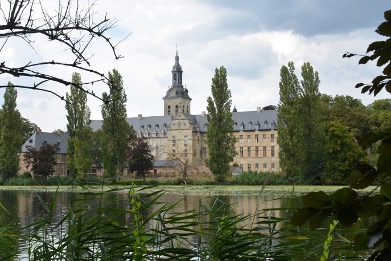
In the clear waters of the ponds, the Abbey shimmered in perfect reflection. A pair of white swans moved elegantly with unhurried grace. It was autumn, and I thought how the leaves would linger only a little while longer before winter quietly claimed them. And yet, there was comfort in that certainty. Nature whispered its reassurance that the seasons would change, and flowers would bloom again.
During troubled times, this park became my refuge. If only there were a place like this back home, perhaps my mother, too, could find a gentle pause and respite from the monotony and loneliness of everyday life.
In my small hometown in northern India, for women, life moves within the restricted boundaries of their homes, while men can loiter around the streets and in chowks without a second thought. There are almost no public parks, lakes, rivers, or welcoming squares where women could sit with their tangled thoughts and breathe alongside nature. At best, one can go to the terrace, look up at the vastness of the sky, and make oneself believe, for a fleeting moment, that one is free, only to return to familiar enclosures.
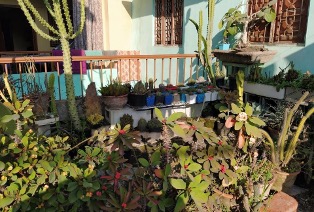
Earlier, one could see the seasonal blooms of the courtyard trees, but as the town grew and housing typologies changed to accommodate increasing density, the trees were the first to disappear. Now, the only trace of nature left at home is a small cactus garden on the terrace, a reminder of resilience and endurance. With the setting sun, I let my thoughts rest. The walk left me tired, and I wanted to sit on the old wooden bench nearby, but the red barrier tape stretched across it reminded me of the stark, cruel reality of the moment.
It is astonishing how swiftly the virus has taken away the simplest pleasures of life. And yet, perhaps it is a reminder of a deeper truth: how we often fail to cherish what we have until it slips away quietly.
Author’s Note
This text constitutes a reflective examination of the crucial role that green public spaces play as essential urban infrastructure, particularly in supporting human health and well-being. Rooted in the author’s personal experiences, the text was first developed during the COVID-19 pandemic and was subsequently expanded into a full-length article titled In the Green of Health: Resilience and Recovery through Green Open Spaces, which was published in the December 2019 issue of MyLiveableCity magazine.
Author Bio
Sheeba Amir is an urban researcher and practitioner based between India and Germany. She holds a PhD in Architecture, and her research focuses on landscape commons, multispecies entanglements, and human–nature relationships.
Banner Image Credits: The author