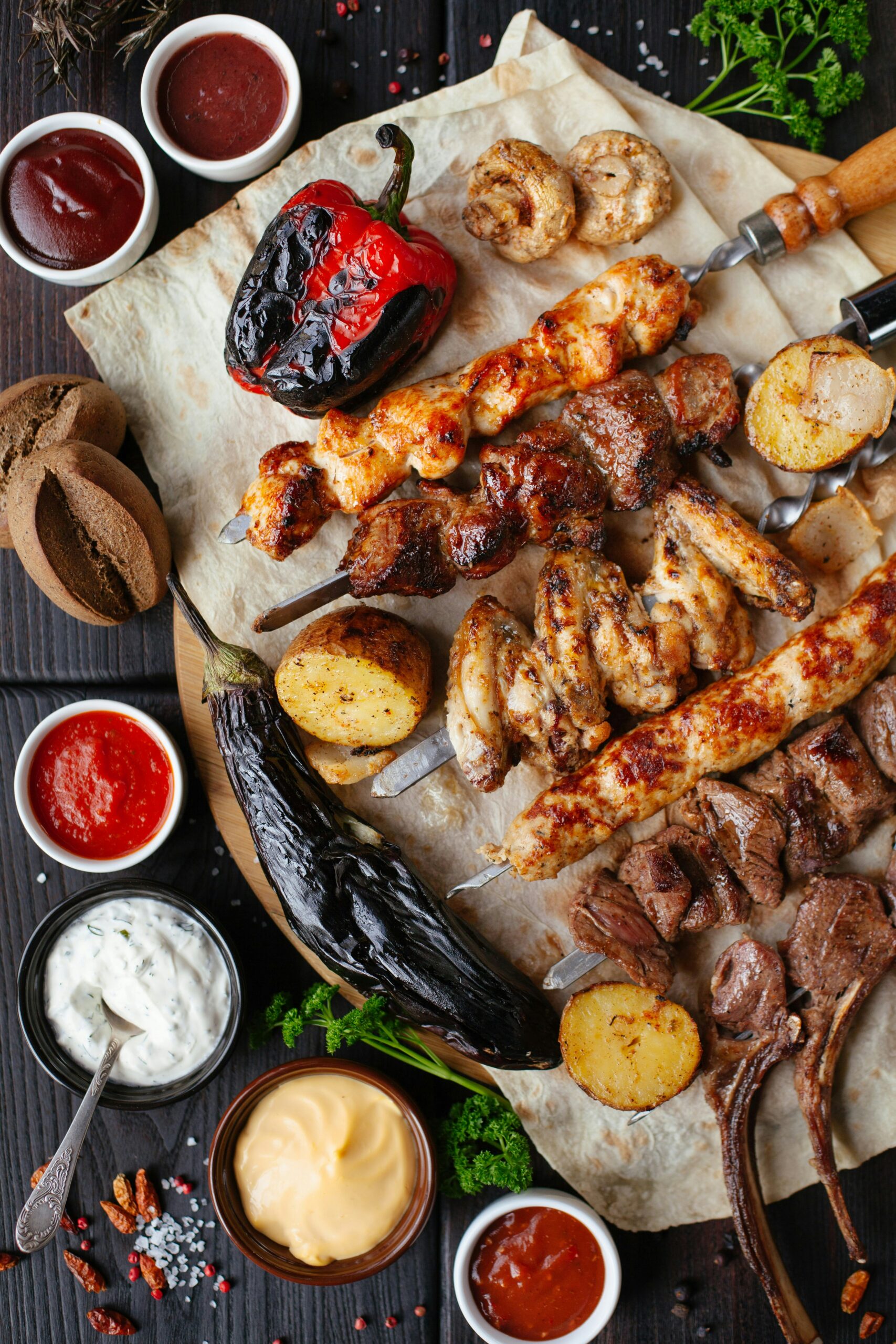
Municipality of Odivelas, Portugal: a public school canteen, a plate that is not just food; it acts like a border but also a bridge.
Halal food crosses the table as both nourishment and language, received by the body as political territory. For Muslim students, eating halal food is also an expression of identity; it acts as an intimate reflection of one’s self. Here, eating emerges as an act of citizenship.
The Halal Project emerged from the initiative of the local Muslim community of Odivelas, who came to Portugal from its former colonies, such as Mozambique, Macau, and India, and settled here in the mid-1970s. A simple and radical gesture lies at the heart of the Halal Project: to acknowledge difference and transform it into coexistence in public schools marked by interculturality.
Having halal meals in Portuguese public schools is, above all, the opposite of exclusion. It is the body sitting at the canteen, the table reclaimed by the word of “we”, united by food when the current media and far-right political parties claim that it is “US” versus “THEM”. The school—so often a mirror of today´s society’s inequality— becomes a place of belonging. In the steam of the kitchens, a common identity is cooked. Between pots and trays, the meat is served in the name of love.
The hands that serve do more than just cook: they perform the right to be ourselves without fear.
The stories of the local Muslim community of Odivelas move through the smell of meat, the sound of prayers, and the weight of the true meaning of the word integration. Halal is also a memory: of a grandmother who cooked in silence, of a father who came from the Portuguese ex-colonies in search of a better life, of a child learning that difference can be nourishing.
Halal here is not exoticism; let’s not forget, it is about reciprocity and equality. It is the recognition that the purity of food does not lie only in origin, but in the possibility of eating together and sharing different ways of seeing and being in the world—Muslims and non-Muslims, side by side, under the same school roof. Each shared meal is, in itself, a micro-politics of encounter: a performed negotiation between the sacred and the bureaucratic, between religion and society.
Odivelas rehearses what could be a new anthropology of public politics—one that begins with food. If citizenship is to be taught, perhaps the first lesson is to ensure that every child can eat without fear. That the State may learn to listen to the faith expressed through food, and not merely tolerate it. That inclusion is not written in decrees, but in menus. We strive for intercultural, not multicultural societies.
In an era when hatred is served cold and identities are poorly understood, Halal public policy imbues sufficient warmth to make change possible, to make politics feel human.
It’s not a policy FOR the local Muslim community of Odivelas but WITH them, for all of us who want to live in an equitable society. Not an act of charity, no, but of co-authorship between the mechanisms of local power and the will of the local community.
A cartography of trust between the city council, families, and cooks—between the bureaucratic and the spiritual. One that serves a greater purpose: the full integration of everyone through food, beyond skin, beyond belief and beyond discrimination.
And perhaps every public policy should begin this way: with a shared meal, with warmth and a smile. With a gesture that says, “There is room for everyone at the table”.
Reference
Alves, P. da S. (2024, December). Projeto Halal em Odivelas: Políticas públicas de inclusão social e integração educativa através da alimentação para a comunidade muçulmana local (Working Paper No. 25). CRIA–Iscte.
Author’s Note
This experimental reflection reinterprets the ethnographic insights of a Working Paper on the same theme to transform it into a public manifesto on food, belonging, and citizenship. It translates anthropological research into a poetic-political form, inviting readers to think of a Halal food public policy as a space of shared nourishment—where care, culture, and the common meet at the everyday table.
Author Bio
Pedro Alves is a doctoral researcher at the Centre for Research in Anthropology (CRIA), Lisbon, where he works on halal diets and public policy. He studied Social and Cultural Anthropology in Portugal and holds a Master’s degree in the field from ISCTE (2021). He has been a member of the International Commission on the Anthropology of Food and Nutrition (ICAF) since 2024 and joined the Observatory of the Islamic World in 2025. His research focuses on Islamic issues, with an emphasis on public and educational anthropology, interculturality, food, and Muslim communities.
Banner Image Credits: Photo by Victoria Shes on Unsplash (Free to use under the Unsplash License.)