Colonialism, like the absence of feminism, is always a delicate theme.
It feels like when you tell a man that if you had been a man yourself, things would have gone differently, and he replies: Bro, I don’t think so, don’t exaggerate.
The same happens when you are white, you acknowledge your privilege, and someone tells you: No, come on, it’s just that locals are slow, strange, inefficient.
I live in Malawi, one of the poorest countries in the world.
Yet some expatriate colleagues insist it isn’t really poor, because, they say, people manage to have “a meal” every day.
But that meal is often just chewing on a sugarcane stick.
Data tells a different story, but poverty indexes are often cited comfortably when they are far away, in someone else’s privileged reality.
Absurdities pile up.
A visiting colleague, white, male, straight, once asked me if I was the only white woman in my office.
I smiled and said yes.
His answer: Oh my God, I’m so sorry.
Sorry for what?
My colleagues are the most welcoming people I have ever worked with.
I feel better working with them than with anyone else.
The problem is not them.
The problem is a system that refuses to give them space.
And meanwhile, we talk of adaptation, of climate, of communities, of reforestation.
My colleagues know what to do.
They know how to do it.
They know where the gaps are and how to address them.
But they are not given the space to lead.
Because the system does not allow it.
Because the system is a sophisticated machine, global, Western, bureaucratic, built on suspicion, designed to prevent corruption somewhere else, but applied everywhere.
Rules without flexibility.
Rules that assume everyone is corrupt.
Rules that crush local rhythms, local ways of working, local time, local values.
Donors complain: locals are slow, they don’t know how to use the tools.
But who pays for those tools?
Excel is not free.
A computer is not free.
A smartphone is not free.
And yet we expect people to compete, without resources, without training, without licenses, without access.
We pay them less, we don’t train them, we don’t provide the software, and still, we expect them to perform as if they had graduated from prestigious European schools.
And when you name colonialism or racism, the answer is: No, don’t exaggerate, we are here to help.
But climate governance is fragile precisely because of this denial.
Local expertise is silenced not because it does not exist, but because the system prefers standardized models over messy but authentic realities.
Because Western hierarchy and speed are always framed as better.
Better compared to what?
As once a friend wrote, to bitter roots that carry the memory of stolen wealth, silenced voices, centuries of domination with new names but the same taste.
And this repeats in academia, in publishing, in funding: prestige counts more than quality, labels open or close doors.
The same knowledge, the same work, judged differently depending on where it comes from.
A hierarchy that has never disappeared.
A system that pretends to be neutral but always bends toward power.
This is not only about “empowering” others.
It is about us, with privilege, daring to raise our voices.
Naming injustice not only in activist spaces but in the rooms where money circulates, where policies are drafted, where projects are designed.
Saying clearly: colleagues in the “Global South” are not less capable, they are less resourced, deliberately pushed to the margins of networks that we take for granted.
We need to stop hiding behind the comfort of neutrality.
We need to create space for alternative strategies, grounded in local knowledge, feminist in their ecology, radical in their difference.
We need to stop being paternalistic and let those who know their land lead.
Our role, if any, is to listen, to support when asked, and to denounce the injustice in our own privileged circles.
Because silence, too, is colonial.
And the bitter taste of roots will remain until we dare to let them grow beyond the weight of our biases.
Author’s Note
Rather than offering solutions, this piece confronts the bitter reality of systems that perpetuate inequality under the guise of development or cooperation. It is an invitation to rethink climate adaptation and development not as acts of imposition, but as practices rooted in local knowledge and ecologies. It also urges action, to resist certain behaviors, to discuss them, and to share openly that they are not acceptable. We must create space for genuine alternatives, collaborate, and actively learn from those whose expertise is grounded in place.
This reflection stems from my daily work with Malawian colleagues, facing the challenges of implementing projects. As a white European woman working in one of the countries most exposed to the impacts of climate change, I experience both proximity to and distance from the communities I work with. The difficulty does not lie with my local colleagues, whose warmth and competence are evident, but with the persistent colonialism embedded in international systems and practices. Too often, local expertise is sidelined by rigid bureaucracies and Western expectations, despite every major framework acknowledging that adaptation must be local. Writing this poem is my way of voicing these contradictions: being embedded in structures that reproduce inequality while also witnessing their effects. My positionality, white, foreign, with access to networks and tools unavailable to many colleagues, forces me to reflect on privilege, silence, and enduring legacies of power.
Author Bio
Carla De Agostini is an early-career researcher currently based in Lilongwe, Malawi, where she’s collaborating with a global agency on large-scale climate adaptation and restoration projects. Her work focuses on ecosystem-based approaches, integrated landscape management, and community-led resilience. She holds an interdisciplinary background in environmental policy, with a particular interest in traditional knowledge and in sharing knowledge through diverse forms, including art and collective perception.
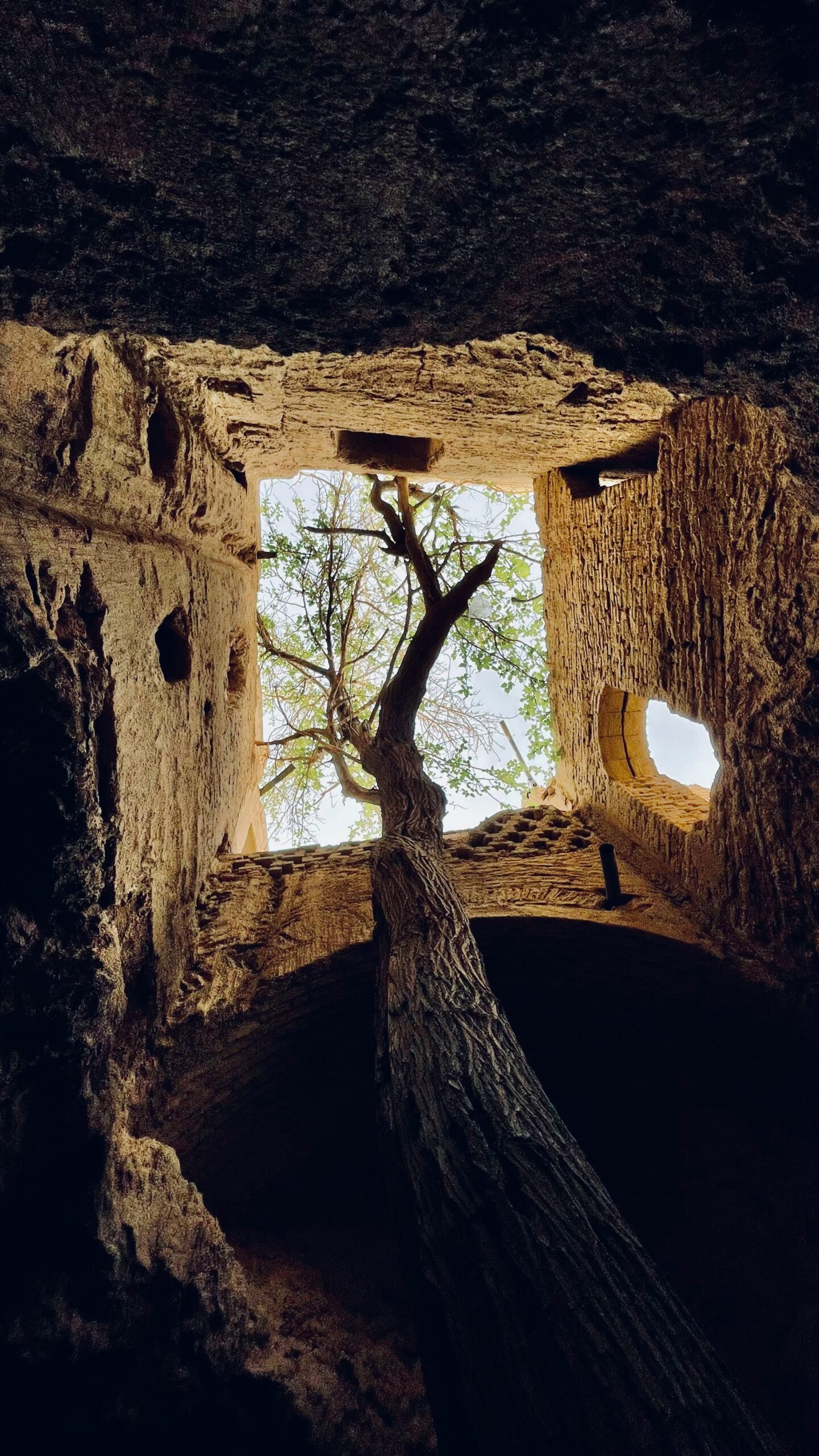
Banner Image Credits: Photo by Maryam Assar on Unsplash (Free to use under Unsplash License)